The golden mosaics
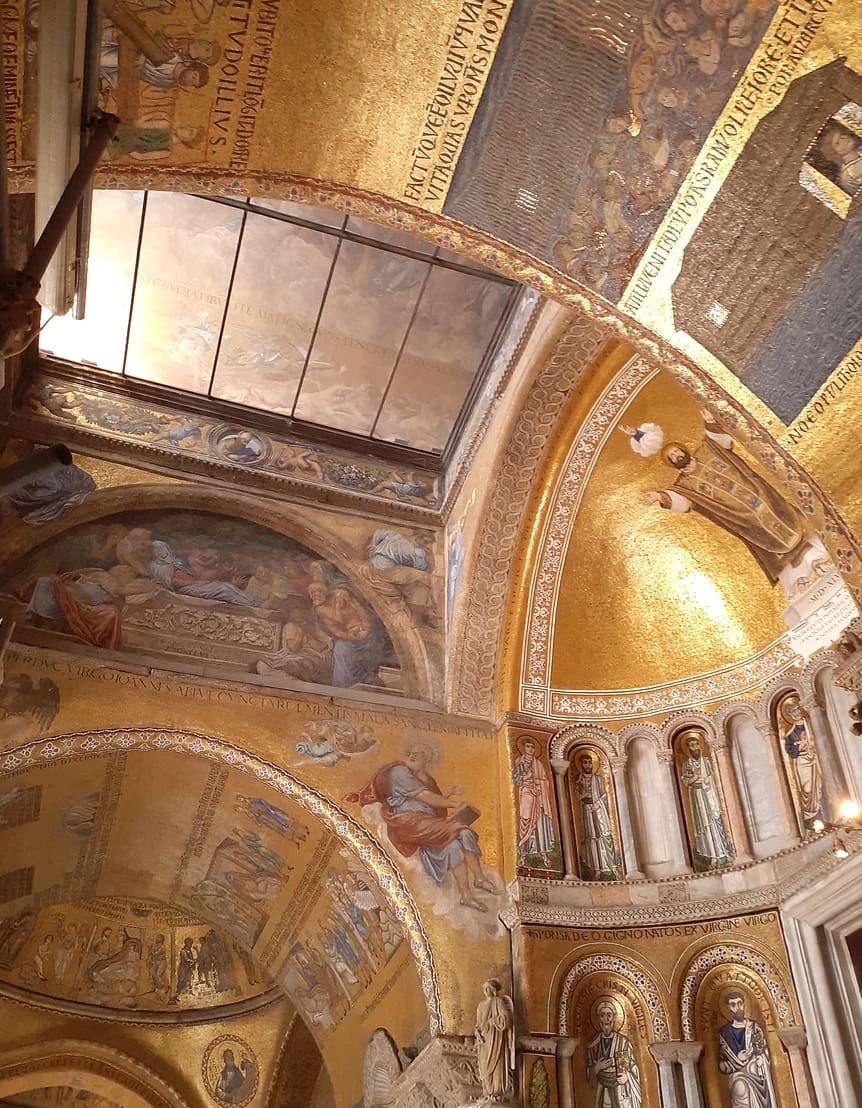
The Basilica's mosaics are made from small pieces, or tesserae, assembled into images and decorative fields. Gold-backed tesserae catch and scatter light across the curved surfaces. Their imagery belongs to a long history of Christian storytelling and Byzantine artistic influence, developed over successive periods.
Look at how an image relates to the architecture around it: a dome or arch changes the angle from which its figures are seen. A little distance can make the composition easier to read.
The horses and the Loggia
The bronze horses associated with San Marco are a striking link to the ancient world and to Venice's history of cultural exchange. The Loggia dei Cavalli gives a vantage point above the piazza. When looking at the horses, distinguish between the historic sculptures and the reproductions displayed on the exterior.
The Pala d'Oro
The Pala d'Oro is an elaborate altarpiece of gold, enamel and precious stones. Its many small images invite close attention, but it also belongs to the larger setting of the sanctuary and the religious life of the church.
The Treasury
The Treasury contains precious liturgical and historical objects. Consider them not only as works of craftsmanship, but also as evidence of devotion, movement and exchange across cultures. Display arrangements and access may vary.
Step outside into the square ↗